SkyWalker系列 | 2.0 旧项重提

旧项重提
本来一款初中时制作的小车应该很快随时间推移被忘却,结果好巧不巧赶上大一刚开学,学院科协举办四驱车比赛,来自4年前的记忆又被找回了。😅 原版SkyWalker太过陈旧而且已经被拆的体无完肤,我决定升级2.0,来应对比赛。 而事实上比赛时间很紧,初赛要求交PPT展示和答辩,这意味着我要在1周内画板并制作原型机。🫠 时间实在不够,所以上不了什么技术,接下来一起看看2.0又什么功能吧。😗
技术细节
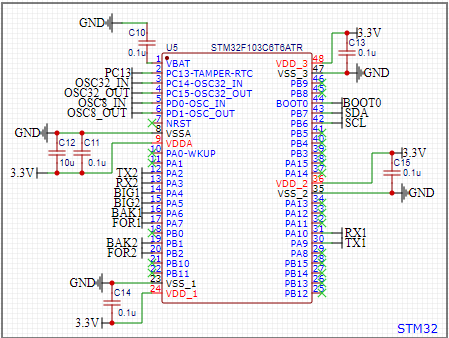
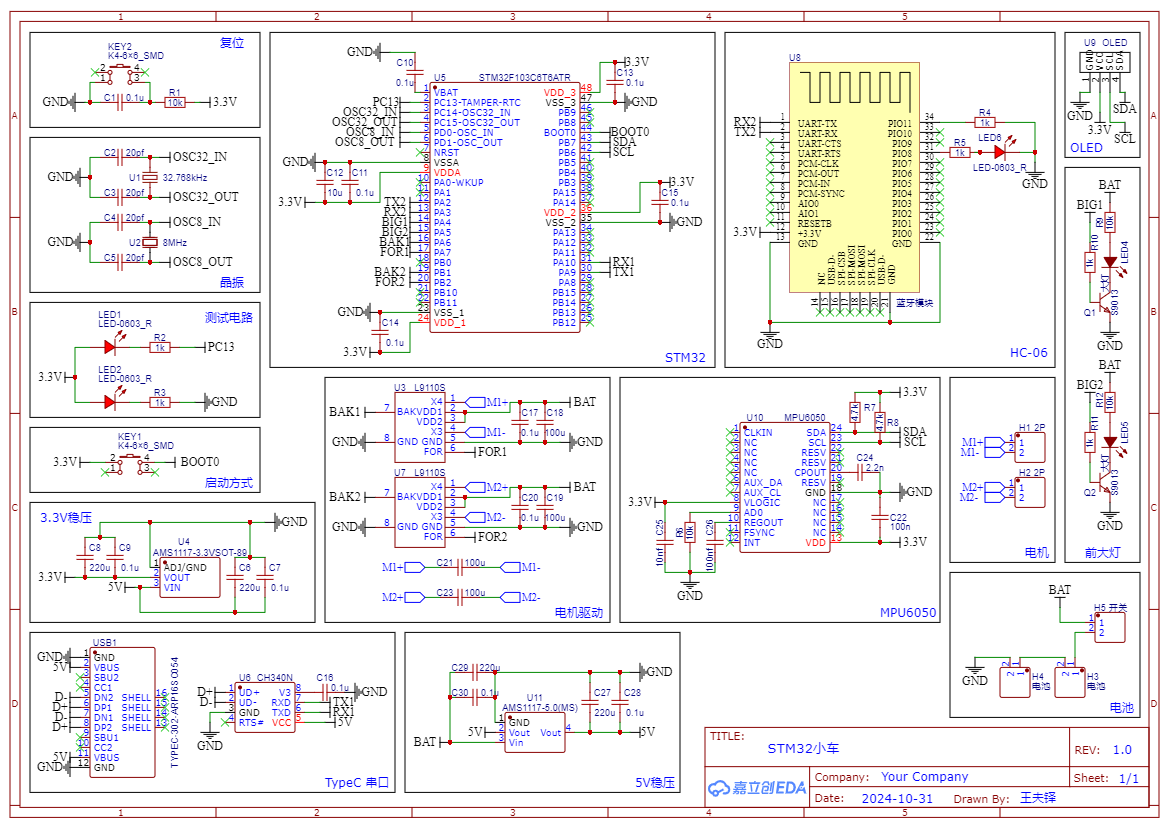
- stm32f103c6t6a主芯片。
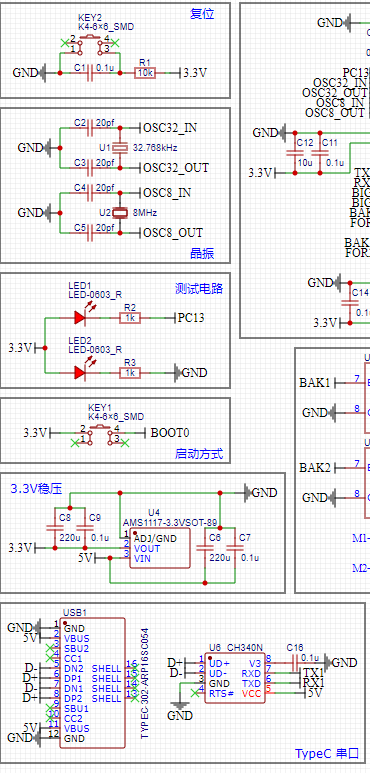
- 自带CH340N串口转换,一键烧录程序。
复位电路画错了,需要手捏BOOT0按键再插电源才能进入烧录状态。
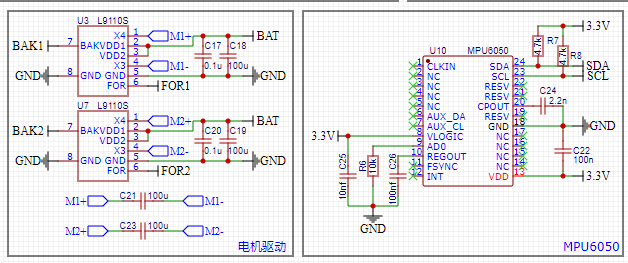
- L9110S电机驱动芯片。
- MPU6050陀螺仪。
- HC-06蓝牙串口。
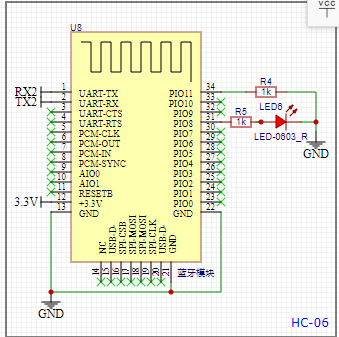
短时间也想不出什么创新点,就加了个陀螺仪,检测Z轴正负可以识别小车正反,再软件校正; 这样操控手就无需关注小车正反,按前进依然是前进。 为了花里胡哨,还整了两个大灯和一个0.96OLED显示器。
虽然结构简单没有技术含量,但是放在大一的小比赛里也足够看了,初赛我们以第一的排名成功晋级。🤩
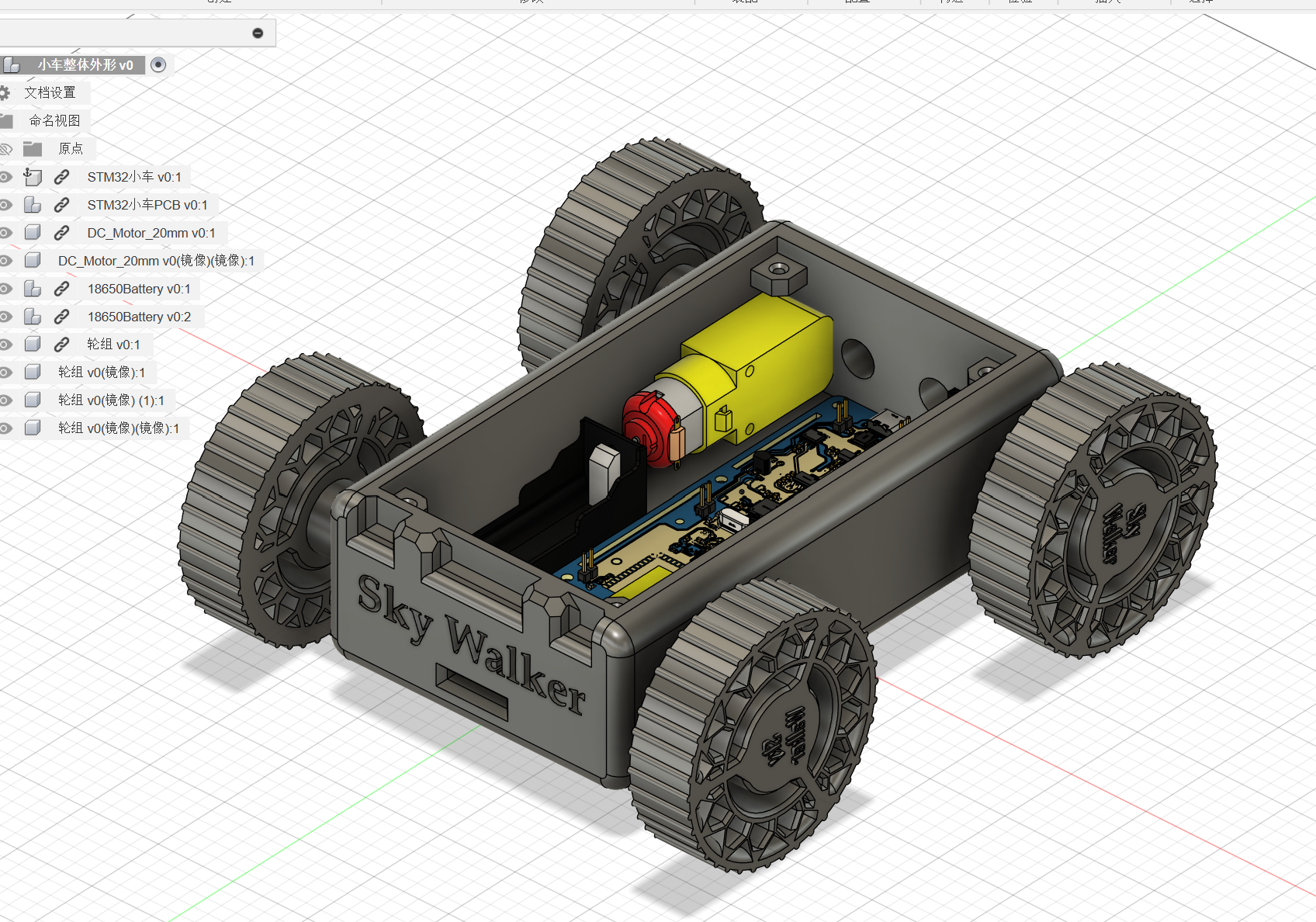
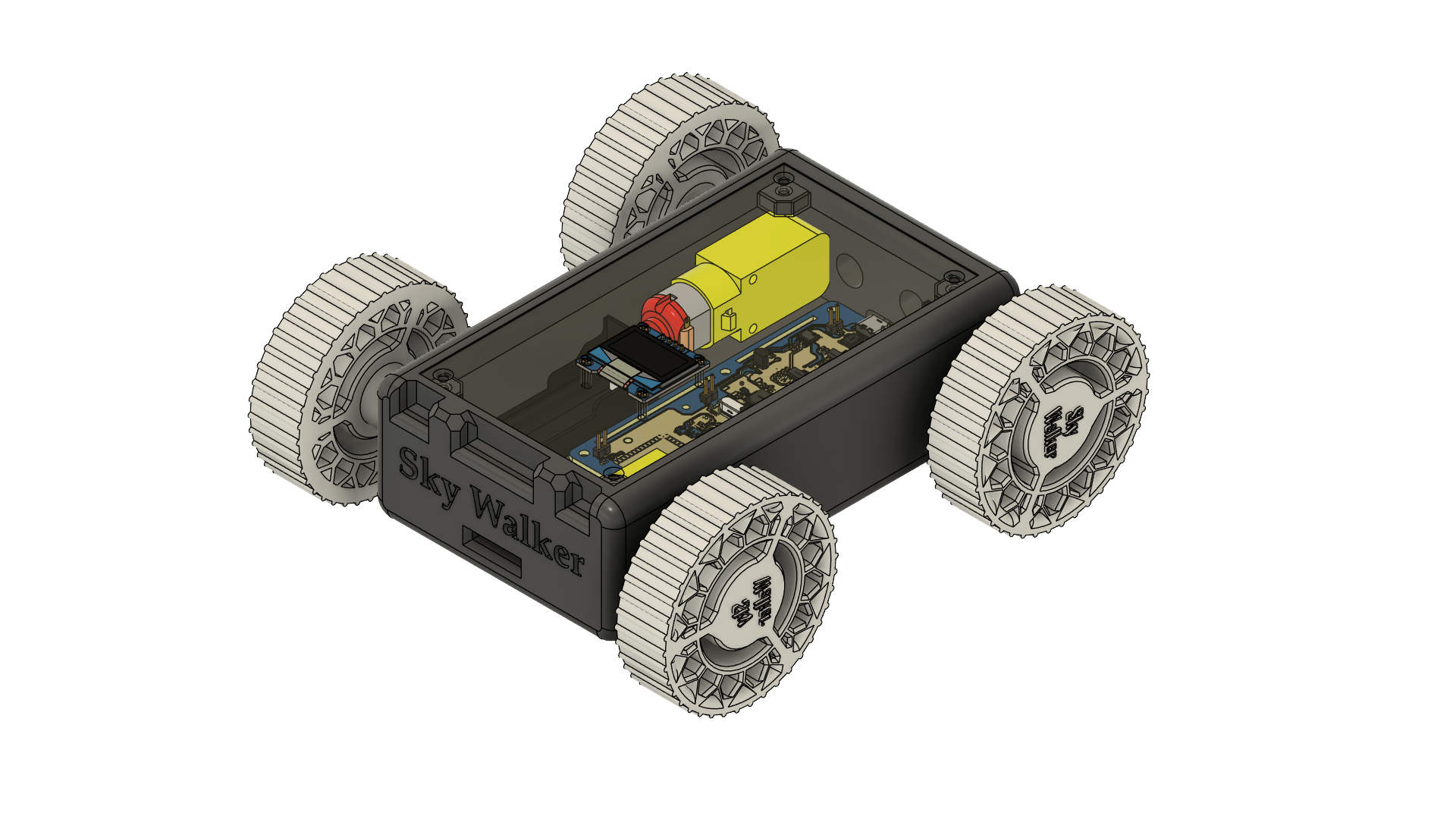
垃圾的结构设计
为了设计它的外壳,学习了Fusion360,结果没想到还挺简单的。 PLA碳纤维3D打印外壳,轮组也一样。 轮组的齿轮上本来还应该套上传动皮带,但是没到货。最后到货了,发现尺寸不对,也用不了🙄
我把做了一半的SkyWalker带到了学校,队员来宿舍玩,遥控SkyWalker往墙上撞。我也是真没想到居然这么不禁撞,轮组的轴部直接撞断了。 碳纤维的硬度高,但是很脆;而且这次结构设计的很垃圾,轴承太小,电机杆又很粗,导致轮组的轴部很细。😔
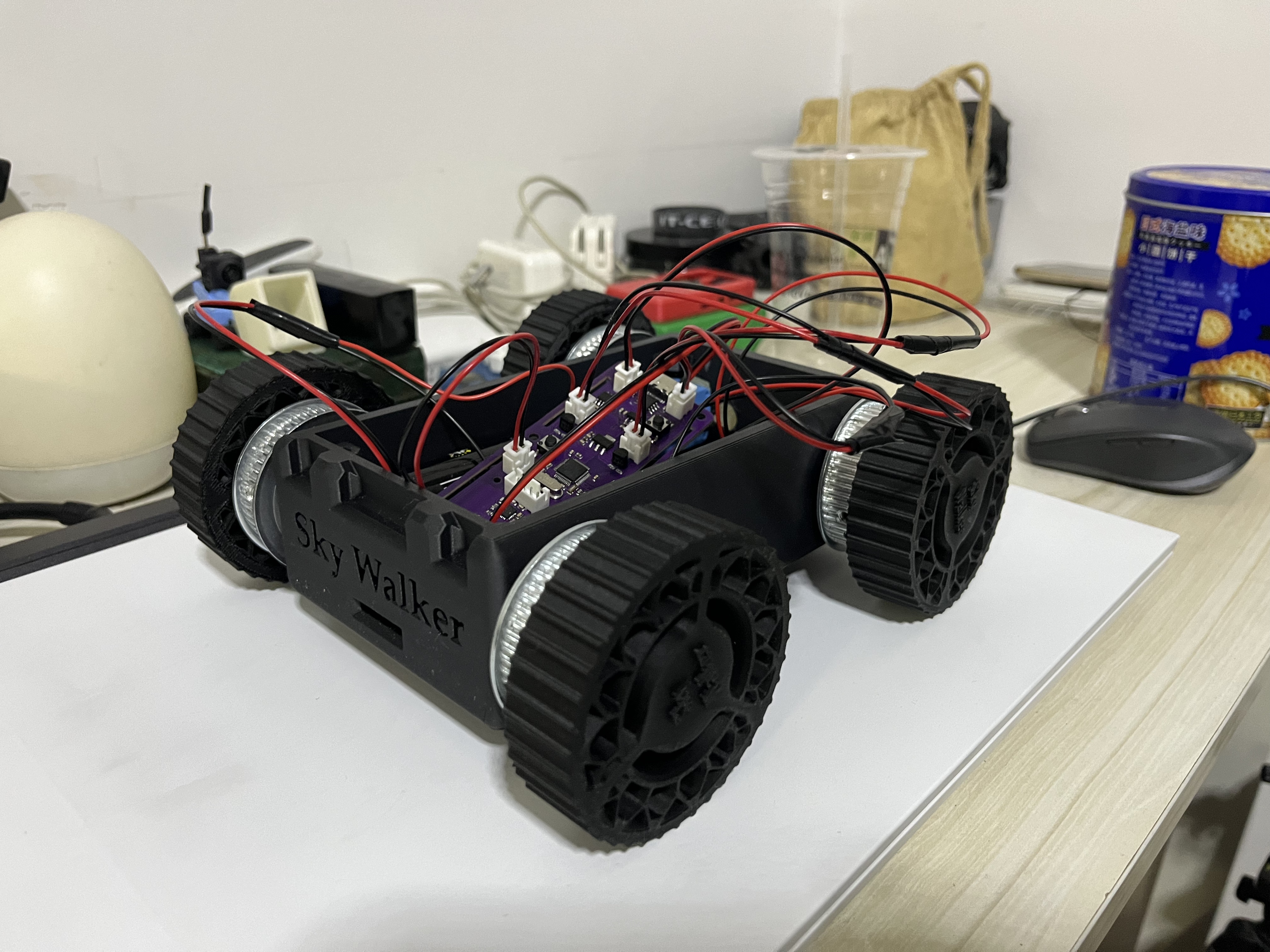
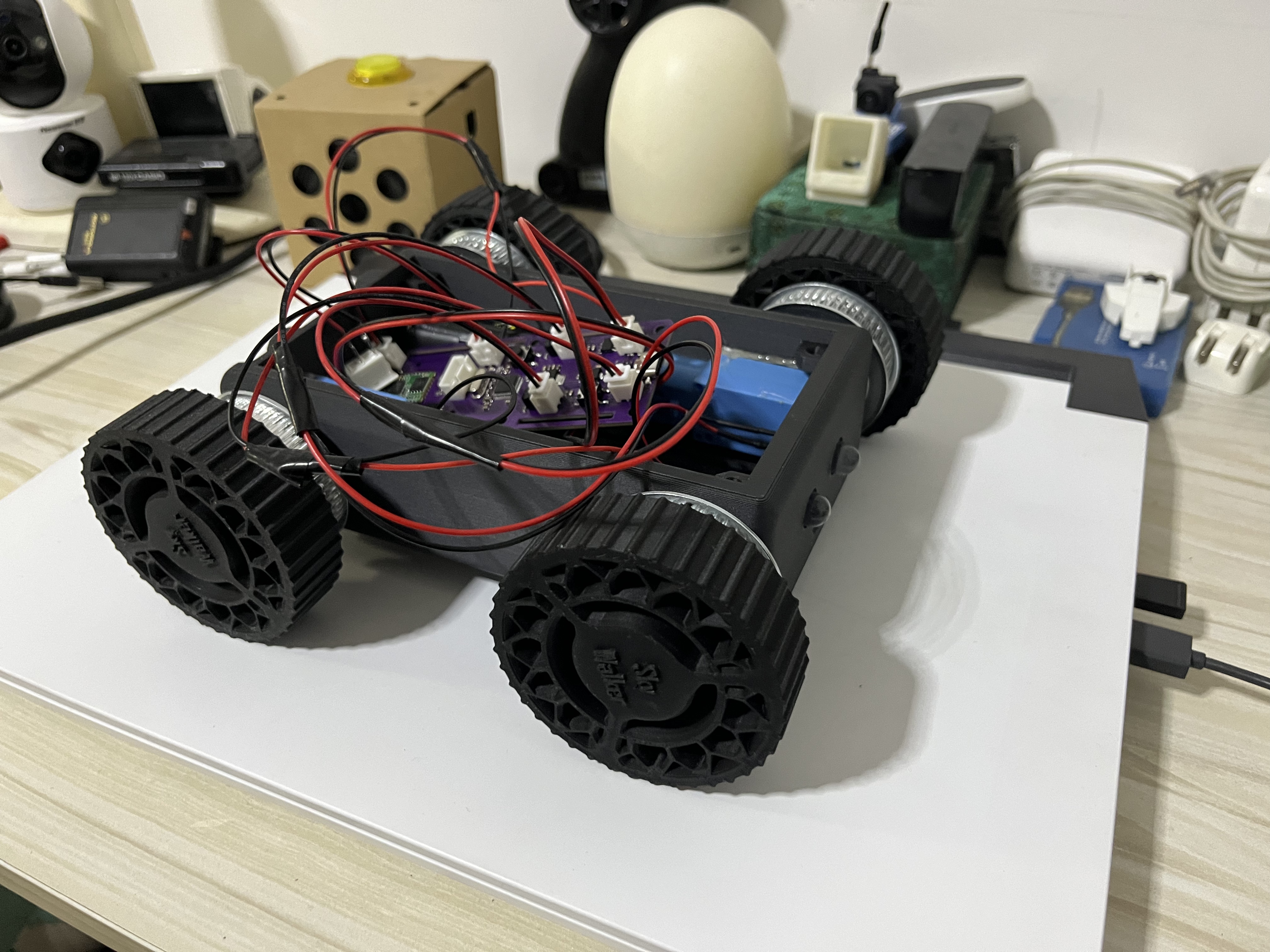
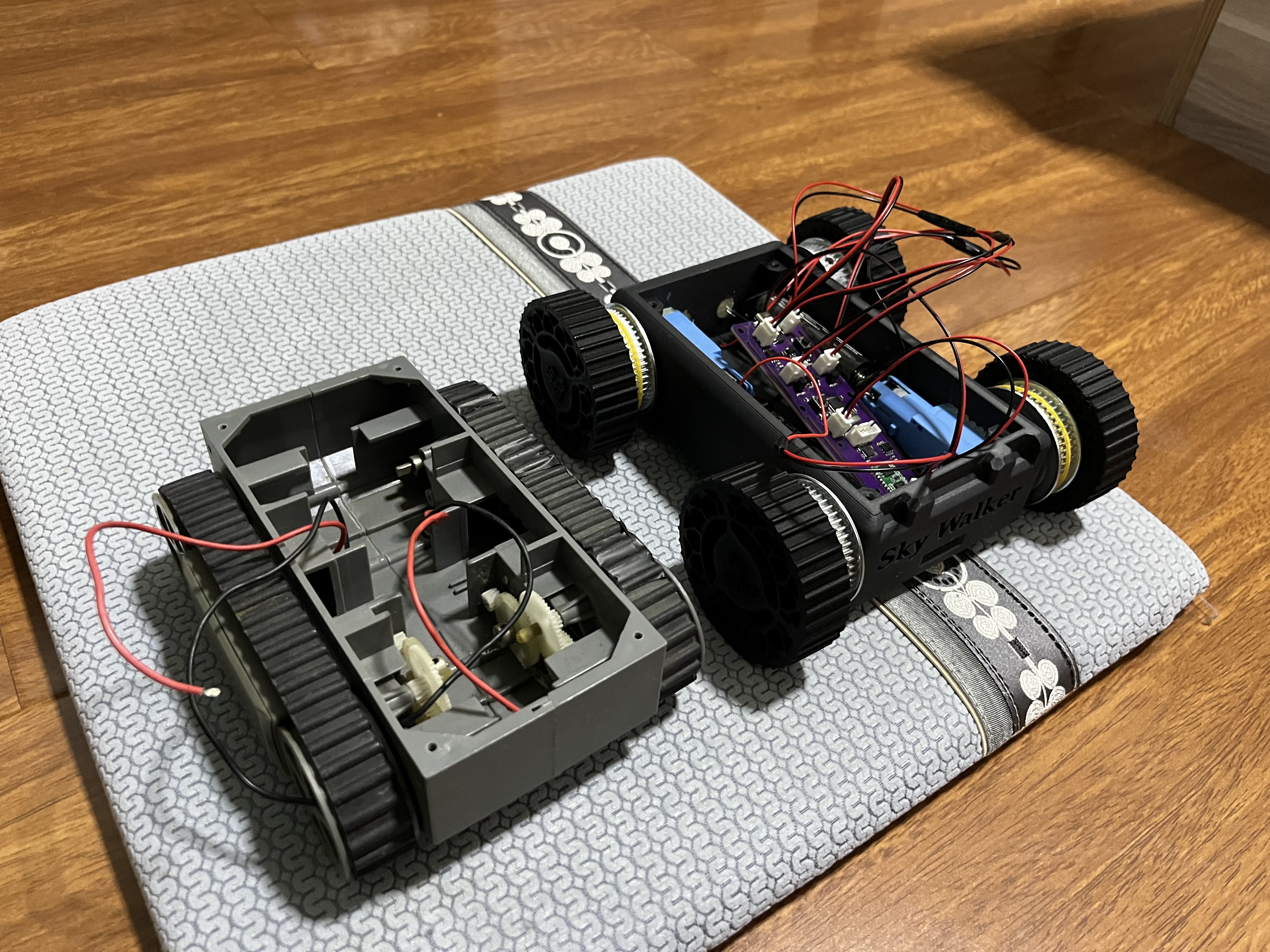
已经被拆的只剩壳的1.0和2.0的合影。🤧
最后SkyWalker失去了两轮子,也没有办法再安装到外壳上了,我就索性拆了拿泡沫板做了个2.1版。🤢
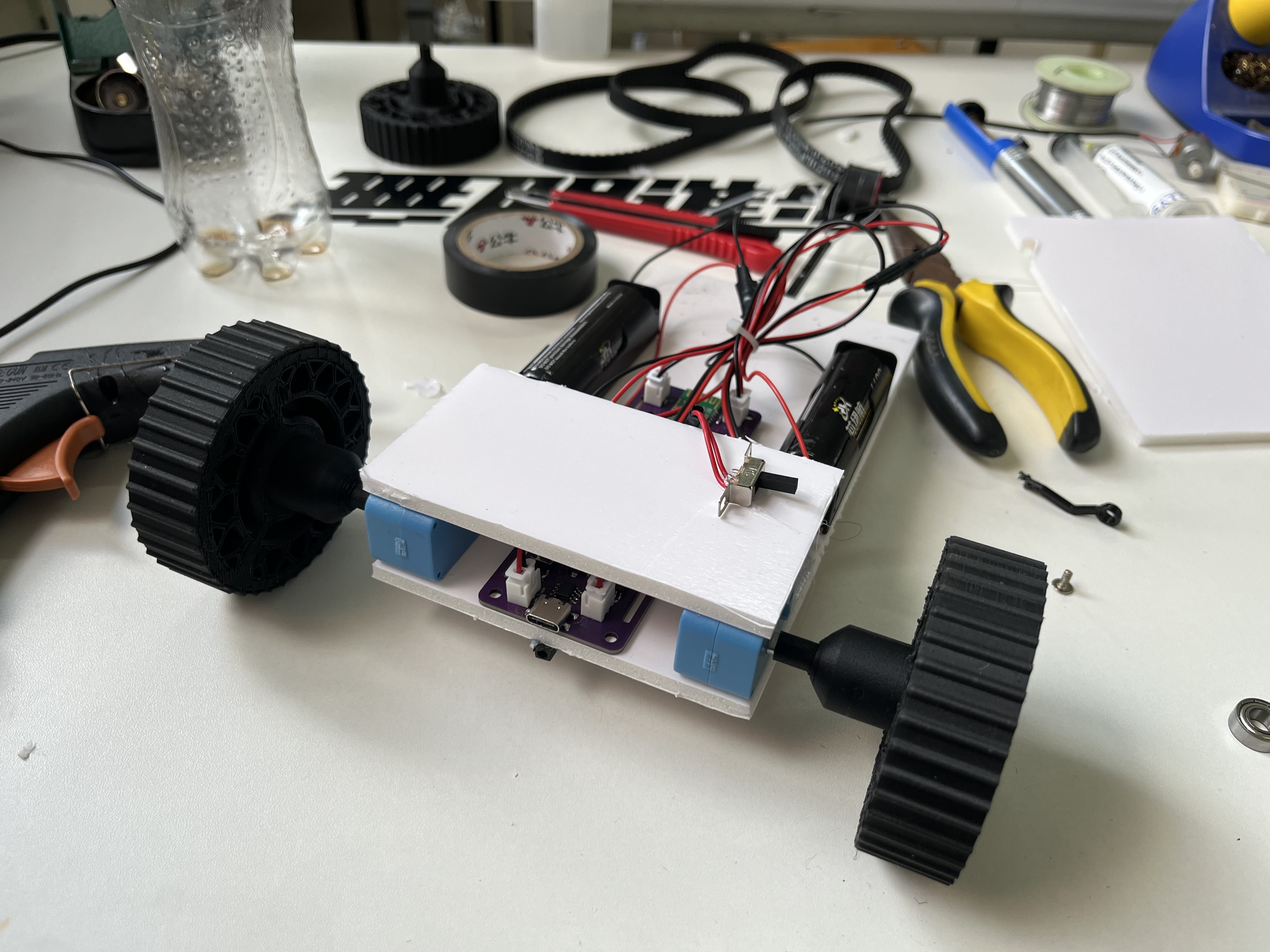
所谓的2.1版本
最后我们组就拿着这个2.1参加的比赛。 而由于是大一比赛,时间又紧,主办方允许复赛用现成买的成品车,所以我这种还坚持手搓已经赢了,事实上也就只有我还手搓。 由于两个碍眼的大减速电机,对于这个竞速赛来说,那必定是最后一名;💩 没让我想到的是,前两圈SkyWalker居然一直保持领先,原因是临时加在尾部的碳杆阻挡住了其他车的前进。 不过该来的总会来。在第二圈半的时候,SkyWalker转向没有转好,后面的车冲着SkyWalker的右前轮就撞了过去,清脆一响,又断了。 这下,也确实变成最后一名了。🤡
代码初始化部分是CubeMX生成的,主要看蓝牙串口和main
1
2
3
4
5
6
7
8
9
10
11
12
13
14
15
16
17
18
19
20
21
22
23
24
25
26
27
28
29
30
31
32
33
34
35
36
37
38
39
40
41
42
43
44
45
46
47
48
49
50
51
52
53
54
55
56
57
58
59
60
61
62
63
64
65
66
67
68
69
70
71
72
73
74
75
76
77
78
79
80
81
82
83
84
85
86
87
88
89
90
91
92
93
94
95
96
97
98
99
100
101
102
103
104
105
106
107
108
109
110
111
112
113
114
115
116
117
118
119
120
121
122
123
124
125
126
127
128
129
130
131
132
133
134
135
136
137
138
139
140
141
142
143
144
145
146
147
148
149
150
151
152
153
154
155
156
157
158
159
160
161
162
163
164
165
166
167
168
169
170
171
172
173
174
175
176
177
178
179
180
181
182
183
184
185
186
187
188
189
190
191
192
193
194
195
196
197
198
199
200
201
202
203
204
205
206
207
208
209
210
211
212
213
214
215
216
217
218
219
220
221
222
223
224
225
226
227
228
229
230
231
232
233
234
235
236
237
238
239
240
241
242
243
244
245
246
247
248
249
250
251
252
253
254
255
256
257
258
259
260
261
262
263
264
265
266
267
268
269
270
/* USER CODE BEGIN Header */
/**
  ******************************************************************************
  * @file           : main.c
  * @brief          : Main program body
  ******************************************************************************
  * @attention
  *
  * Copyright (c) 2024 STMicroelectronics.
  * All rights reserved.
  *
  * This software is licensed under terms that can be found in the LICENSE file
  * in the root directory of this software component.
  * If no LICENSE file comes with this software, it is provided AS-IS.
  *
  ******************************************************************************
  */
/* USER CODE END Header */
/* Includes ------------------------------------------------------------------*/
#include "main.h"
#include "i2c.h"
#include "usart.h"
#include "gpio.h"

/* Private includes ----------------------------------------------------------*/
/* USER CODE BEGIN Includes */

/* USER CODE END Includes */

/* Private typedef -----------------------------------------------------------*/
/* USER CODE BEGIN PTD */

/* USER CODE END PTD */

/* Private define ------------------------------------------------------------*/
/* USER CODE BEGIN PD */

/* USER CODE END PD */

/* Private macro -------------------------------------------------------------*/
/* USER CODE BEGIN PM */

/* USER CODE END PM */

/* Private variables ---------------------------------------------------------*/

/* USER CODE BEGIN PV */

/* USER CODE END PV */

/* Private function prototypes -----------------------------------------------*/
void SystemClock_Config(void);
/* USER CODE BEGIN PFP */

/* USER CODE END PFP */

/* Private user code ---------------------------------------------------------*/
/* USER CODE BEGIN 0 */
void Relax(void)
{
  HAL_GPIO_WritePin(GPIOC, GPIO_PIN_13, GPIO_PIN_SET);

  HAL_GPIO_WritePin(GPIOA, GPIO_PIN_6, GPIO_PIN_RESET);
  HAL_GPIO_WritePin(GPIOA, GPIO_PIN_7, GPIO_PIN_RESET);

  HAL_GPIO_WritePin(GPIOB, GPIO_PIN_1, GPIO_PIN_RESET);
  HAL_GPIO_WritePin(GPIOB, GPIO_PIN_2, GPIO_PIN_RESET);
}
void Go_Straight(void)
{
  HAL_GPIO_WritePin(GPIOC, GPIO_PIN_13, GPIO_PIN_RESET);

  HAL_GPIO_WritePin(GPIOA, GPIO_PIN_6, GPIO_PIN_RESET);
  HAL_GPIO_WritePin(GPIOA, GPIO_PIN_7, GPIO_PIN_SET);

  HAL_GPIO_WritePin(GPIOB, GPIO_PIN_1, GPIO_PIN_RESET);
  HAL_GPIO_WritePin(GPIOB, GPIO_PIN_2, GPIO_PIN_SET);
}
void Go_Back(void)
{
  HAL_GPIO_WritePin(GPIOC, GPIO_PIN_13, GPIO_PIN_RESET);

  HAL_GPIO_WritePin(GPIOA, GPIO_PIN_6, GPIO_PIN_SET);
  HAL_GPIO_WritePin(GPIOA, GPIO_PIN_7, GPIO_PIN_RESET);

  HAL_GPIO_WritePin(GPIOB, GPIO_PIN_1, GPIO_PIN_SET);
  HAL_GPIO_WritePin(GPIOB, GPIO_PIN_2, GPIO_PIN_RESET);
}
void Turn_Left(void)
{
  HAL_GPIO_WritePin(GPIOC, GPIO_PIN_13, GPIO_PIN_RESET);

  HAL_GPIO_WritePin(GPIOA, GPIO_PIN_6, GPIO_PIN_SET);
  HAL_GPIO_WritePin(GPIOA, GPIO_PIN_7, GPIO_PIN_RESET);

  HAL_GPIO_WritePin(GPIOB, GPIO_PIN_1, GPIO_PIN_RESET);
  HAL_GPIO_WritePin(GPIOB, GPIO_PIN_2, GPIO_PIN_SET);
}
void Turn_Right(void)
{
  HAL_GPIO_WritePin(GPIOC, GPIO_PIN_13, GPIO_PIN_RESET);

  HAL_GPIO_WritePin(GPIOA, GPIO_PIN_6, GPIO_PIN_RESET);
  HAL_GPIO_WritePin(GPIOA, GPIO_PIN_7, GPIO_PIN_SET);

  HAL_GPIO_WritePin(GPIOB, GPIO_PIN_1, GPIO_PIN_SET);
  HAL_GPIO_WritePin(GPIOB, GPIO_PIN_2, GPIO_PIN_RESET);
}


void sendToBluetooth(uint8_t *data, uint16_t size) {
    HAL_UART_Transmit(&huart2, data, size, HAL_MAX_DELAY);
}
uint8_t rxBuffer[100];
uint16_t rxIndex = 0;
uint8_t receivedData;
void HAL_UART_RxCpltCallback(UART_HandleTypeDef *huart)
{
    if (huart->Instance == USART2)
    {
        rxBuffer[rxIndex++] = receivedData;
        if (rxIndex >= sizeof(rxBuffer))
            rxIndex = 0;
        if (receivedData == '1')
            Go_Straight();
        else if (receivedData == '2')
            Go_Back();
        else if (receivedData == '3')
            Turn_Left();
        else if (receivedData == '4')
            Turn_Right();
				else if (receivedData == '0')
            Relax();
        HAL_UART_Receive_IT(&huart2, &receivedData, 1);
    }
}
void receiveFromBluetooth() {
    uint8_t receivedData;
    HAL_UART_Receive_IT(&huart2, &receivedData, 1);
}

/* USER CODE END 0 */

/**
  * @brief  The application entry point.
  * @retval int
  */
int main(void)
{

  /* USER CODE BEGIN 1 */

  /* USER CODE END 1 */

  /* MCU Configuration--------------------------------------------------------*/

  /* Reset of all peripherals, Initializes the Flash interface and the Systick. */
  HAL_Init();

  /* USER CODE BEGIN Init */

  /* USER CODE END Init */

  /* Configure the system clock */
  SystemClock_Config();

  /* USER CODE BEGIN SysInit */

  /* USER CODE END SysInit */

  /* Initialize all configured peripherals */
  MX_GPIO_Init();
  MX_USART2_UART_Init();
  MX_I2C1_Init();
  MX_USART1_UART_Init();
  /* USER CODE BEGIN 2 */

  receiveFromBluetooth();

  /* USER CODE END 2 */

  /* Infinite loop */
  /* USER CODE BEGIN WHILE */
  while (1)
  {
    const char *message = "Hello, Bluetooth!\r\n";
    sendToBluetooth((uint8_t *)message, strlen(message));

    /* USER CODE END WHILE */

    /* USER CODE BEGIN 3 */
  }
  /* USER CODE END 3 */
}

/**
  * @brief System Clock Configuration
  * @retval None
  */
void SystemClock_Config(void)
{
  RCC_OscInitTypeDef RCC_OscInitStruct = {0};
  RCC_ClkInitTypeDef RCC_ClkInitStruct = {0};

  /** Initializes the RCC Oscillators according to the specified parameters
  * in the RCC_OscInitTypeDef structure.
  */
  RCC_OscInitStruct.OscillatorType = RCC_OSCILLATORTYPE_HSE;
  RCC_OscInitStruct.HSEState = RCC_HSE_ON;
  RCC_OscInitStruct.HSEPredivValue = RCC_HSE_PREDIV_DIV1;
  RCC_OscInitStruct.HSIState = RCC_HSI_ON;
  RCC_OscInitStruct.PLL.PLLState = RCC_PLL_ON;
  RCC_OscInitStruct.PLL.PLLSource = RCC_PLLSOURCE_HSE;
  RCC_OscInitStruct.PLL.PLLMUL = RCC_PLL_MUL9;
  if (HAL_RCC_OscConfig(&RCC_OscInitStruct) != HAL_OK)
  {
    Error_Handler();
  }

  /** Initializes the CPU, AHB and APB buses clocks
  */
  RCC_ClkInitStruct.ClockType = RCC_CLOCKTYPE_HCLK|RCC_CLOCKTYPE_SYSCLK
                              |RCC_CLOCKTYPE_PCLK1|RCC_CLOCKTYPE_PCLK2;
  RCC_ClkInitStruct.SYSCLKSource = RCC_SYSCLKSOURCE_PLLCLK;
  RCC_ClkInitStruct.AHBCLKDivider = RCC_SYSCLK_DIV1;
  RCC_ClkInitStruct.APB1CLKDivider = RCC_HCLK_DIV2;
  RCC_ClkInitStruct.APB2CLKDivider = RCC_HCLK_DIV1;

  if (HAL_RCC_ClockConfig(&RCC_ClkInitStruct, FLASH_LATENCY_2) != HAL_OK)
  {
    Error_Handler();
  }
}

/* USER CODE BEGIN 4 */

/* USER CODE END 4 */

/**
  * @brief  This function is executed in case of error occurrence.
  * @retval None
  */
void Error_Handler(void)
{
  /* USER CODE BEGIN Error_Handler_Debug */
  /* User can add his own implementation to report the HAL error return state */
  __disable_irq();
  while (1)
  {
  }
  /* USER CODE END Error_Handler_Debug */
}

#ifdef  USE_FULL_ASSERT
/**
  * @brief  Reports the name of the source file and the source line number
  *         where the assert_param error has occurred.
  * @param  file: pointer to the source file name
  * @param  line: assert_param error line source number
  * @retval None
  */
void assert_failed(uint8_t *file, uint32_t line)
{
  /* USER CODE BEGIN 6 */
  /* User can add his own implementation to report the file name and line number,
     ex: printf("Wrong parameters value: file %s on line %d\r\n", file, line) */
  /* USER CODE END 6 */
}
#endif /* USE_FULL_ASSERT */